Hydroclimate extremes simulation & prediction
Simulation and prediction of extreme hydro-meteorological events using wavelet-based spectral transformation and machine learning.
Understanding · Modelling · Forecasting
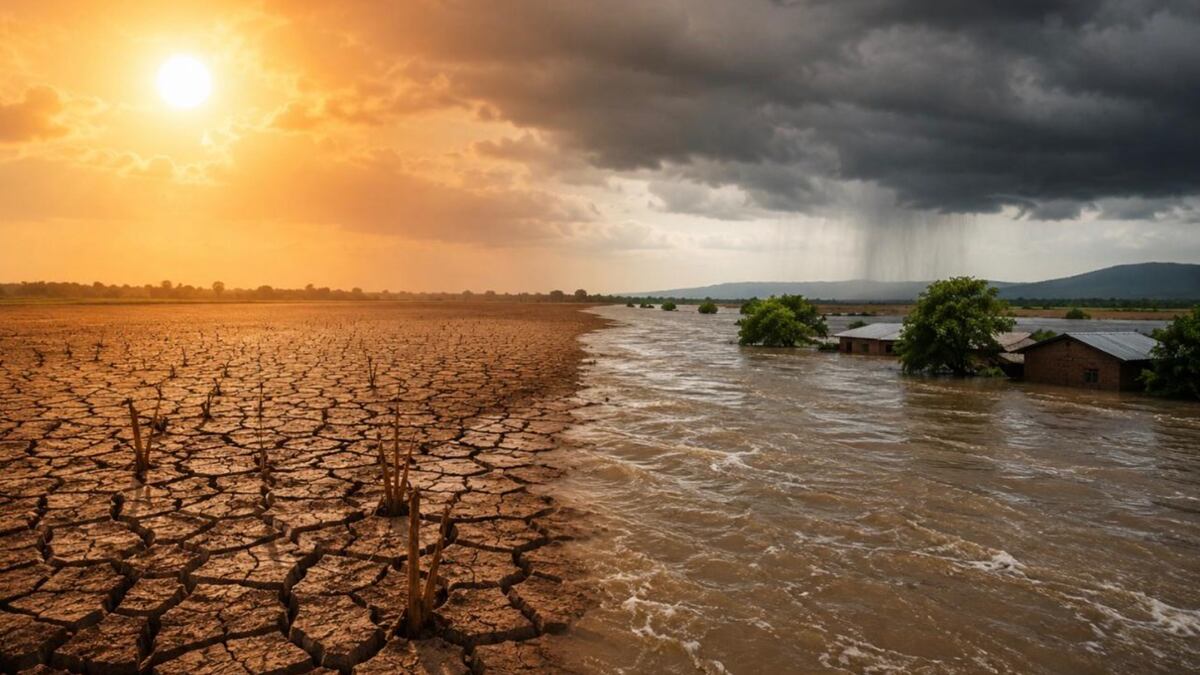
We advance the prediction of extreme hydrometeorological events — floods, droughts and compound hazards — by developing wavelet-based spectral transformation methods, multi-model ensemble frameworks, and physics-informed machine learning.
01 / About
HydroclimateX Lab develops advanced methods for predicting extreme hydrometeorological events — floods, droughts, and compound hazards — across timescales from seasonal to decadal. Our work integrates wavelet-based spectral transformation, multi-model ensemble frameworks, and physics-informed machine learning to bridge cutting-edge research and operational water management.
We maintain the open-source WASP (WAvelet System Prediction) toolkit, available in R, Python and MATLAB, along with companion tools for wavelet-based quantile mapping (WQM), predictor identification (NPRED), and synthetic data generation (synthesis).
Explore our open-source tools ↗02 / Research interests
Simulation and prediction of extreme hydro-meteorological events using wavelet-based spectral transformation and machine learning.
Modelling interactions among climate, water infrastructure, agriculture, and human decision-making to support adaptive water management.
Prediction and risk assessment of floods, landslides, and compound hydroclimate hazards using satellite observations, terrain information, and advanced modelling.
Hydrological-hydrodynamic, hydroecological, and water quality process modelling for integrated watershed management.
Post-processing and bias correction of climate and weather forecast models using frequency-domain quantile mapping (WQM).
Research approach
03 / Publications
Selected publications from the lab. The full list is synced weekly from Google Scholar. Papers are grouped into research directions using title keywords. Showing current records.
04 / Showcase
Research method · Open software · Live application
WASP refines predictor representation using wavelet theory for improved hydrologic prediction. Explore the published methodology and open-source R, Python and MATLAB packages, then launch the dedicated interactive application.
Bias correction · Ensemble precipitation · Live application
WQM corrects precipitation forecast bias across temporal scales and reconstructs an ensemble that represents timing uncertainty. Explore the method, then compare the official two-station demonstration.
Synthetic data · Reproducible experiments · Live application
Generate representative stochastic and chaotic systems directly in the browser. Adjust model parameters, inspect time-series and state-space plots, and download reproducible data.
Research method · Open software · Live flood simulation
Run LISFLOOD-FP rainfall scenarios over Qixia District, Nanjing and inspect flood hazard, risk, depth and velocity layers. The methodology page documents the design storms, the DEFRA hazard rating, the risk matrix and data source.
05 / Contact
We welcome motivated MSc and PhD students and postdoctoral researchers interested in hydroclimate extremes, AI/ML for environmental prediction, and open-source scientific software development.